How to Create a Shopify Hero Banner That Makes Sales
Tutorials & Tips
9 Min Read
Hero banner tips for Shopify stores that want more clicks, better first impressions, and higher sales with the right image, copy, CTA, and mobile layout.
Your homepage gets one fast chance to make people stay. That is why the first section matters so much. When a visitor lands on your store, they want clarity right away. They want to know what you sell, why it matters, and what to do next.
A strong hero banner does that job in seconds.
Still, many Shopify stores get this part wrong. For example, some add too much text. Meanwhile, others use dull images. In many cases, stores also forget mobile. As a result, the top of the page looks nice but does not help sales.
This guide breaks the process into simple steps. You will learn what works, what to skip, and how to build a banner that feels clean, clear, and ready to convert. Along the way, we will also cover what is a hero banner, how to think about hero banner size, and where to look for smart ideas without copying random hero banner examples that do not fit your brand.
What is a hero banner?
Let us start with the basic question.
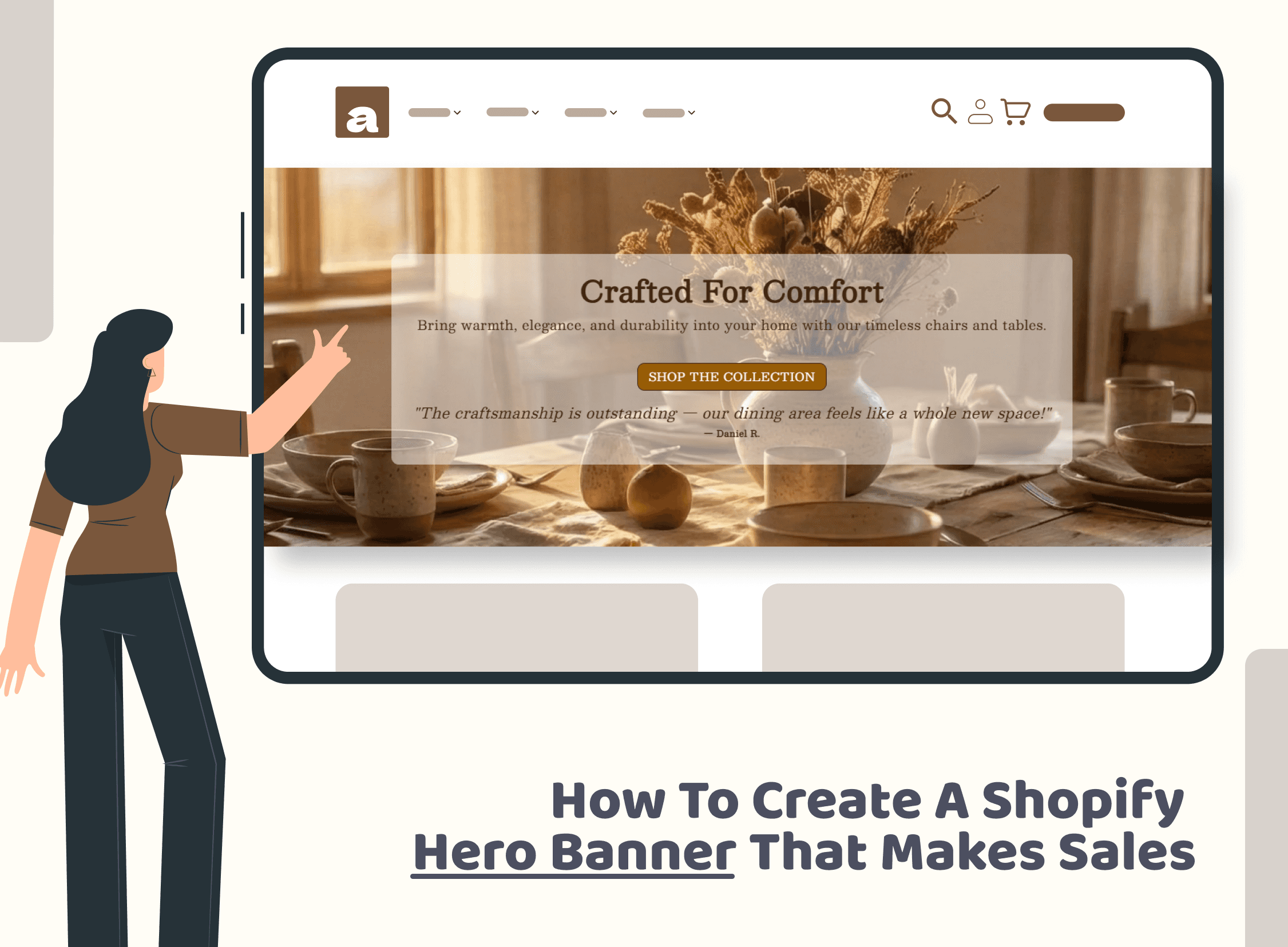
If you are wondering what is a hero banner?, it is the large section at the top of a homepage or landing page. It usually includes an image or video, a headline, short supporting text, and a button. In simple terms, it is the first major message your visitor sees.
Because it sits above the scroll, it carries a lot of weight. It shapes your first impression. It also sets the tone for the page. More importantly, it tells shoppers where to go next.
A good hero banner does not try to say everything. Instead, it pushes one strong message. That message could highlight a best seller, a new launch, a sale, a value promise, or a core category. The key is focus.
Think of it as your store’s front window. When that window looks sharp and clear, more people walk in. When it feels messy or vague, they leave.
Why your Shopify banner affects sales
People do not read your homepage like a brochure. They scan and judge fast. Then they decide whether your store feels worth their time.
That is why your banner should guide action, not just decorate the page.
A sales-focused hero banner helps in four ways:
Explains what you sell
Shows why your offers matter
Builds trust through clean design
And gives visitors one easy next step
For example, if you sell skincare, your banner should not open with a vague line like “Feel the glow.” That sounds pretty, but it says little. A better version would say what the product does, who it helps, and where the click leads.
Clear copy wins because shoppers do not want to guess.
Strong design matters too. For example, when the image looks polished and the layout feels easy to scan, visitors feel more confident. As a result, that confidence often shapes whether they keep browsing or leave.
If you want to improve the full look of your store, this guide on boosting your Shopify store’s design gives a useful next step without adding more complexity.
Start with one goal, not five
Before you pick an image or write a headline, decide what the banner needs to do.
This step sounds obvious. Even so, many stores skip it. Instead, they try to promote a discount, a new launch, free shipping, social proof, and their brand story all at once. As a result, that approach weakens the whole section.
So, choose one goal.
Your goal might be:
push traffic to a collection
promote a best seller
highlight a seasonal offer
collect emails for an upcoming drop
introduce your brand to new visitors
Once you choose the goal, every part of the banner becomes easier. And the headline gets sharper. The image gets clearer. The button makes more sense.
Because of that, the section feels stronger.
Write a headline that people understand fast
Your headline should say the main benefit in plain words. It should not sound clever just to sound clever. It should sound useful.
That means you should avoid fluffy lines like:
Style meets comfort
Designed for everyday living
A better way to shop
Those lines can fit almost any brand. So they do not create urgency or clarity.
Try this instead:
Lightweight jackets for cold morning runs
Organic cotton bedding made for better sleep
Modern storage furniture for small apartments
Now the visitor knows what you sell. They also know why it matters.
A good rule helps here. Make the headline specific. Then keep the supporting line short. After that, add one clear CTA.
For instance:
Headline: Summer dresses that feel light all day
Text: Shop easy fits, soft fabric, and fresh prints made for warm weather
CTA: Shop Dresses
That flow works because it feels natural. It does not force the sale. Still, it moves the shopper closer to one.
Use an image that supports the message
The image should strengthen your copy, not fight with it.
A lot of brands choose large visuals that look pretty on a mockup but fail on a real store. Consequently, the product gets lost. At times, the text fades into the background. On top of that, mobile crops the subject. In turn, the banner underperforms.
So, choose an image with a clear subject and enough open space for text. Likewise, show the product in context when that context helps. Above all, keep the visual connected to the offer.
If you sell fashion, show the clothing in use. For furniture, place it in a real room setting. Meanwhile, if you sell supplements, focus on the product plus one clear lifestyle cue, not ten.
Also, check contrast. Your headline should stay readable without forcing the visitor to squint.
Design teams often study how people engage with above-the-fold content because that first section shapes direction and click behavior. For that reason, research and UX guidance around homepage structure support the need for clarity, hierarchy, and a strong next step.
Hero banner best practices that drive clicks
Now let us get practical. If you want a Shopify banner that helps sales, focus on these five parts.
1. Keep one message above the fold
Say one thing well. Instead, resist the urge to stack offers. In most cases, a banner with one main idea feels stronger than one trying to carry the entire homepage.
2. Add one main CTA
Use one button for the primary action. And you can add a secondary text link if needed, but do not give equal weight to three choices. As too many paths slow people down.
Good CTA examples:
Shop Now
Explore Collection
See Best Sellers
Build Your Set
Get Early Access
3. Design for mobile first
Many stores build on the desktop and “adjust later.” That creates problems. As mobile crops images differently. Text wraps faster. Buttons drop lower. So test the section on a phone early.
4. Make text easy to scan
Use short lines. Keep the subtext tight. Break long thoughts into smaller units. After all visitors should understand the message in seconds.
5. Match the click destination
If the banner says “Shop Linen Sets,” then click should land on linen sets. Not a generic category page. Nor to the homepage again. Message matches matter because it keeps momentum strong.
If you need inspiration for layout and spacing, a practical overview of homepage structure and above-the-fold priorities can help you think beyond visuals.
Hero banner size for Shopify stores
A lot of store owners ask about hero banner size as if there is one perfect answer. In reality, the right size depends on your theme, image style, and how the section behaves on mobile.
Still, a few rules make the job easier.
First, use a high-quality image that stays sharp on larger screens. Second, avoid oversized files that hurt load speed. Third, test the crop on desktop and mobile before you publish.
Here is a simple way to think about hero banner size:
Banner goal | Recommended visual style | What to watch |
Product launch | Wide image with product focus | Keep product centered for mobile crop |
Sale banner | Clean image with strong text space | Do not let discount text get too small |
Brand story | Lifestyle image with room for copy | Avoid busy backgrounds |
Collection push | Image with category cues | Match image to landing page |
This table helps you connect purpose with layout. In short, the best hero banner size is the one that protects your message, loads well, and still looks clear on a phone.
Learn from hero banner examples, but do not copy them blindly
Looking at hero banner examples can help. First, you see what kinds of layouts brands use. Then, you spot image trends. At the same time, you notice how some stores handle copy, CTAs, and white space.
However, copying random hero banner examples often leads to weak results.
Why? Because your products, margins, buyer intent, and brand voice are different.
Use hero banner examples to study patterns, not steal outcomes. Ask better questions:
Does the image support the offer?
Is the headline clear in three seconds?
Does the button feel obvious?
Would this still work on mobile?
Does the design fit the product price point?
That is how useful research works. You collect signals. Then you adapt them.
The best hero banner examples usually share the same traits. First, they stay focused. In addition, they use less text. They also show the product clearly. At the same time, they avoid visual clutter. As a result, they make the next click feel easy.
Common mistakes that hurt conversions
Even good stores miss the basics here. So watch out for these common mistakes.
Too much text
Some banners look like mini landing pages. And that kills scan speed. As shoppers do not want a paragraph at the top of the store.
Weak button copy
“Learn More” often feels too soft for ecommerce. Instead use a CTA that reflects shopping intent.
Poor mobile crop
Desktop may look great. Whereas mobile may cut the model’s face, hide the product, or push the button too low.
Generic message
A nice-looking banner without a clear offer does not sell much. Because people need direction.
Wrong image mood
Luxury brands, playful brands, and value brands should not all use the same visual energy. As tone matters, so do your images.
Broken message match
A banner promise that leads somewhere unrelated creates friction right after the click.
These issues might sound small. But together, they shape whether the section sells or stalls.
A simple formula you can reuse
You do not need to reinvent the section every time. Instead use a repeatable formula.
Try this:
Headline
Say what the product is and why it matters.
Support line
Add one detail that reduces doubt or adds interest.
Visual
Show the product, result, or use case clearly.
CTA
Send the visitor to the most relevant next page.
Example:
Headline: Everyday sneakers built for long city walks
Support line: Lightweight, easy to style, and ready for all-day wear
CTA: Shop Sneakers
That formula works for many brands because it keeps the message clean. It also gives your design room to breathe.
How to test whether your banner works
Do not judge the banner by whether you like it. Judge it by whether shoppers respond to it.
You can test:
headline version A vs B
product image vs lifestyle image
sale CTA vs collection CTA
light background vs dark background
short copy vs shorter copy
Look at clicks first. And then check bounce rate, session path, and collection engagement. If the banner brings more people into the right pages, then it is doing its job.
Also, revisit the section often. As seasonal campaigns change. And also the product priorities change. Hence your top banner should keep up.
Conclusion
A high-converting Shopify banner does not need flashy tricks. It needs focus and clarity. Most of all, it needs to make the next step feel easy.
So if you have been asking what is a hero banner?, think of it as your first sales message. If you have been searching for hero banner examples, use them as references, not rules. And if you are stuck on hero banner size, remember that readability, crop control, and speed matter more than chasing one magic number.
In short, the best hero banner feels simple because every part works together. The image supports the offer. The copy says something clear. And the button leads to the right page. Altogether the mobile version still looks strong.
Join our newsletter list
Sign up to get the most recent blog articles in your email every week.
Similar Topic