Can a Shopify Event Calendar Improve Store Engagement?
Tutorials & Tips
4 Min Read
Event calendar can increase engagement by adding structure, building anticipation and bringing shoppers back. Learn how to use it well plus what to avoid.
A store can look great and still feel quiet. Products sit there. Collections look polished. Yet nothing suggests what is happening next. As a result, shoppers browse once and leave.
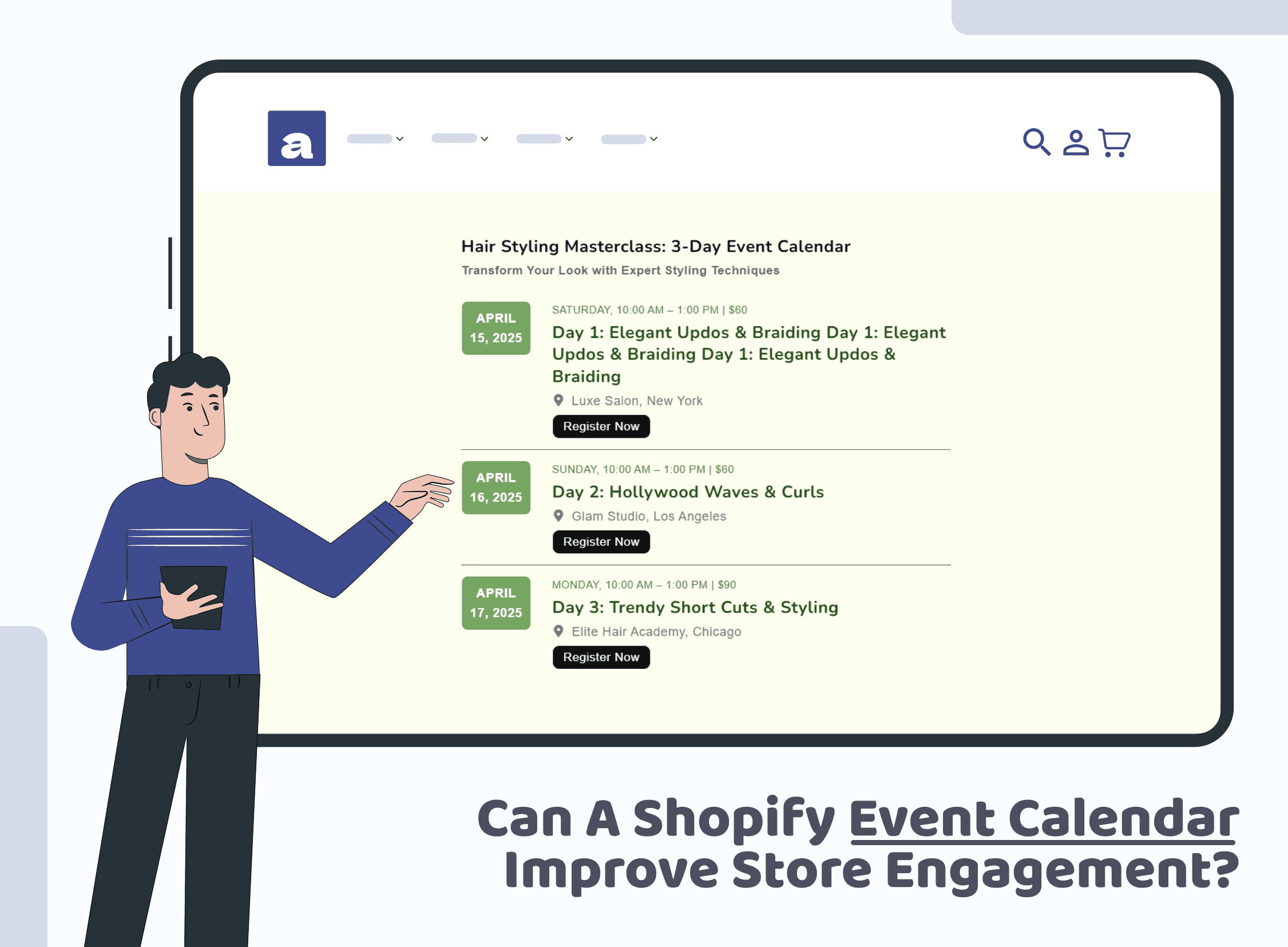
That is where an event calendar can help. It gives your store a rhythm. It also gives people a reason to return, because they can see what is coming up. In addition, it makes promotions easier to follow, which reduces confusion during busy periods.
This is not only for physical events. Even online-only brands can use an event calendar to create momentum and keep attention.
What “more engaging” looks like in a Shopify store
Engagement is not a vague goal. It usually shows up as simple actions: repeat visits, deeper browsing, more email signups, and smoother conversions. An event calendar can support all of these because it makes your marketing visible and predictable.
Shopify also notes that event calendars can help merchants promote things like workshops, conferences, or product launch parties, which can increase engagement and attendance.
Why an event calendar changes how shoppers behave
When shoppers know something is scheduled, they think differently. Instead of treating your store like a one-time visit, they treat it like a place to check back.
A calendar builds anticipation. That anticipation keeps the tab open longer. It also encourages browsing because people want context. For example, if a “Weekend Drop” is listed, shoppers may explore related products before the date. As a result, you get stronger intent before the sale even starts.
In addition, a calendar reduces the “I missed it” problem. When promotions are clear, shoppers feel informed. That helps trust.
What you can feature on an event calendar
You do not need to host meetups to use an event calendar. You only need moments that matter to shoppers.
Here are ecommerce-friendly ideas that work well and keep the calendar active:
New product drops and launch windows
Restocks for high-demand items
Limited-time bundles or gift-with-purchase periods
Seasonal sales and short promo events
Shipping cutoffs during peak weeks
This is enough to make the calendar useful, even for a smaller store. Also, these events naturally support your marketing, since each one can be tied to an email or a homepage section.
Where to place it so people actually use it
Placement matters more than the calendar itself. If nobody sees it, it cannot help engagement.
A common setup is a dedicated “Events” or “What’s On” page in your main navigation. That works well because shoppers can find it again later. However, you can also surface it in smaller ways.
For example, add a compact calendar preview on the homepage. Then link to the full calendar page. You can also place a mini schedule block on a collection page when the collection is tied to a campaign. That creates context at the exact moment shoppers are deciding what to browse.
The hidden benefit: clearer expectations and fewer support questions
When brands run frequent promos, customers often ask the same questions. When is the next sale? Will this restock? Is the discount still active?
An event calendar can reduce those messages because the answers are visible. In addition, it can support list growth. You can invite shoppers to subscribe for reminders tied to upcoming dates. That turns engagement into something measurable.
A simple table to plan your calendar without overthinking
This table helps you decide what to post and how often, based on your store style.
Store type | What to list | Update rhythm |
Product-led brand | Drops, restocks, promo windows | Weekly or biweekly |
Seasonal store | Holiday promos, shipping cutoffs | Monthly, then weekly near peak |
Content-driven brand | Lives, collabs, creator releases | Weekly |
Service + product | Workshops, appointments, launches | Weekly |
This keeps your event calendar from looking empty. It also prevents random posting that confuses shoppers.
What makes a calendar page feel clean and usable
Calendar pages work best when they are fast to scan. Using customizable Shopify sections helps keep layouts clean while still highlighting key events. So keep titles clear, and keep descriptions short. Also, make the action obvious, whether that is “Shop the drop” or “Save the date.”
Some Shopify calendar apps emphasize customizable event displays and different views, which can help the calendar match your brand and improve usability.
At the same time, do not overload each entry with long paragraphs. If people need details, let them click through to a product page or landing page.
Mistakes that reduce engagement
Most calendar issues are easy to avoid. One is adding too many events, which makes the calendar hard to read. Another is leaving expired events visible, which makes your store feel neglected.
Also, avoid vague naming. “Special event” does not help. Instead, lead with what the shopper gets. That could be a drop, a deal or a deadline.
Finally, do not hide the calendar in the footer. If it is meant to drive engagement, it needs a visible path from your homepage or navigation.
Adding it without making your store heavy
Engagement should not slow down your site. So keep the design lightweight and consistent with your theme.
A section-based approach can help because you can place the calendar exactly where it supports the journey, instead of adding extra scripts everywhere. If you want to improve the way you add and arrange sections across your storefront, this Iconic Sections post on customizing your Shopify store using sections is a useful reference.
For more context on how merchants use calendars to promote launches and in-store moments, Shopify shares a helpful overview in this guide promoting events.
Conclusion
Yes, an event calendar can make your store more engaging, if it stays simple and current. It creates anticipation, improves clarity, and gives shoppers a reason to return.
If you use an event calendar to highlight real moments, place it where shoppers will notice it, and keep entries easy to scan, it can quietly increase engagement without changing your products or your brand voice.
Join our newsletter list
Sign up to get the most recent blog articles in your email every week.
Similar Topic