Fashion Lookbook: What It Is and Why Your Store Needs One
Tutorials & Tips
9 Min Read
Fashion lookbook ideas can help your store sell with stronger visuals, better styling, and a smoother shopping journey. Learn why it matters.
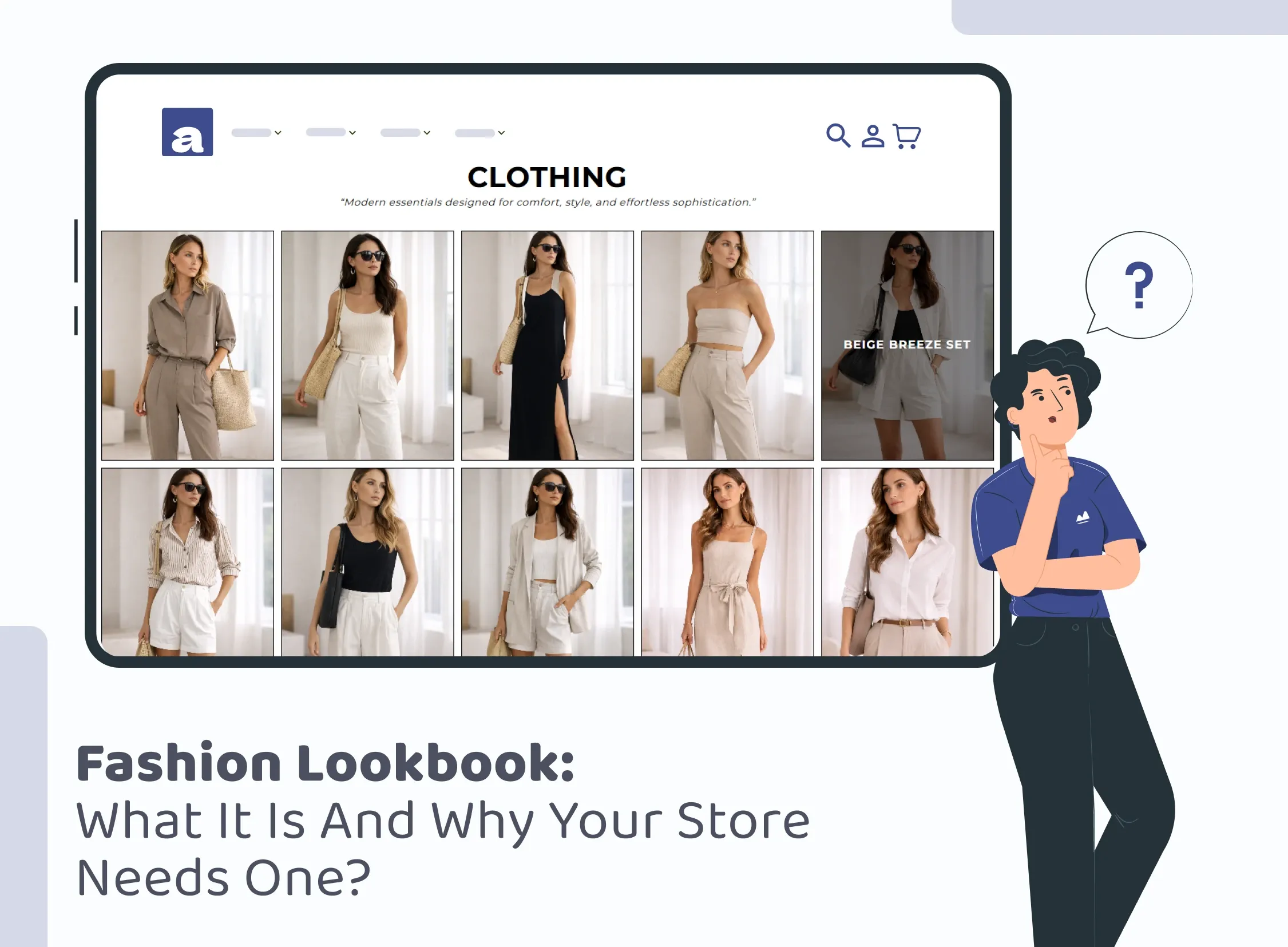
A great store does more than display products. It helps shoppers picture a lifestyle, a mood, and a complete outfit. That is where a fashion lookbook can make a real difference.
Many online fashion stores have strong products but still struggle to hold attention. The images may be clear, yet the shopping experience feels flat. Customers scroll, glance, and leave. They do not always see how pieces work together. They also may not feel inspired enough to buy.
A fashion lookbook solves that problem by adding context to your products. Instead of leaving shoppers to imagine each piece on their own, it shows how items work together in a styled setting. As a result, your brand image feels stronger and more intentional. More importantly, customers can move from casual interest to real buying intent with less hesitation.
For a Shopify store, this matters even more. You are not just competing on price. You are competing on presentation, trust, and ease of shopping. Iconic Sections speaks directly to merchants who want a polished, high-converting store without code, and that same approach fits perfectly with lookbook-driven design. The brand focuses on helping store owners create a professional experience faster and with less friction.
What is a fashion lookbook?
A fashion lookbook is a visual way to present your clothing or accessories as styled outfits instead of isolated products. It often includes model photography, coordinated pieces, seasonal styling, and branded layouts that help shoppers understand the full look.
Unlike a basic catalog, a lookbook is not only about listing items. It’s about storytelling. It highlights your brand point of view and shows how your pieces fit into real wardrobes and real moments. Shopify describes a digital lookbook as an online arrangement of photos and multimedia that often uses lifestyle images to introduce collections, which matches how many modern fashion brands sell online today.
That difference matters. A product grid says, “Here is what we sell.” A lookbook says, “Here is how it all comes together.”
Why shoppers respond to lookbooks
People do not buy fashion only because they need fabric. They buy confidence, identity, and inspiration.
When a shopper lands on your store, they make fast judgments. They look at the quality of your visuals and notice whether your brand feels current. And they decide if your products fit their taste. A fashion lookbook helps shape all of those impressions within seconds.
It also reduces mental effort. Instead of asking customers to imagine how a jacket pairs with trousers or what shoes work with a dress, you show them. That makes the shopping experience feel easier.
Clear styling also creates momentum. When people can see a complete outfit, they are more likely to explore multiple items. That can lift average order value and encourage add-on purchases naturally.
A lookbook helps you sell the whole look, not one item
This is one of the biggest reasons a fashion lookbook matters.
Single-product selling has limits. A customer may like a blouse, but still hesitate because they do not know how to wear it. Once you show that blouse with tailored pants, simple jewelry, and a clean bag, the value becomes clearer.
Now the shopper is not choosing a blouse alone. They are buying into a complete style idea.
This shift can increase confidence. It can also increase basket size. A styled presentation encourages customers to shop across categories rather than stopping at one product page.
That is why many lookbook-inspired experiences have become popular in ecommerce. Shopify app listings for shoppable lookbook tools often highlight features like product tagging, “shop the look” layouts, and image hotspots because curated visual selling can support upsells and bundled discovery.
It strengthens your brand identity
Fashion is visual first. Your store needs to feel consistent, memorable, and intentional.
A fashion lookbook helps you shape that image. You can guide the tone with lighting, poses, backgrounds, colors, and layout. Minimal styling creates one feeling. Bold editorial styling creates another. Clean neutrals suggest timeless fashion. Streetwear shots can signal energy and edge.
Over time, that consistency becomes part of your brand.
This is especially useful for smaller stores trying to stand out. You may not have the budget of a global label. Still, you can create a strong point of view. A good lookbook makes your brand feel curated rather than random.
That is often the difference between a store that feels forgettable and a store that feels established.
It makes your store feel more premium
Perception affects conversion.
If your store looks generic, shoppers may assume your products are generic too. On the other hand, a strong fashion lookbook makes the entire shopping experience feel more polished.
That premium feel does not always require a huge production budget. It often comes from thoughtful presentations. Strong visuals. Clean spacing. Consistent styling. A layout that lets images breathe.
This is one reason visual sections matter so much in Shopify design. Iconic Sections positions its app around helping merchants create a professional, responsive, and higher-converting store without hiring a developer, which supports exactly the kind of polished presentation a lookbook needs.
When the store itself feels elevated, shoppers tend to trust the brand more.
It improves product discovery
Customers do not always start with a clear idea of what they want. Sometimes they are browsing for inspiration. Sometimes they like your brand but do not know where to begin.
A fashion lookbook helps bridge that gap.
It gives people an easy entry point into your collection. They can see hero pieces, complete outfits, seasonal themes, or occasion-based styling. That makes exploration feel guided instead of overwhelming.
For example, a lookbook can organize products around:
weekend outfits
workwear looks
vacation edits
neutral basics
occasion dressing
This approach helps customers discover products they may have missed in a standard collection page. It also keeps them engaged longer.
It supports mobile shopping better than many stores expect
Most fashion traffic now comes from mobile. That means your visuals need to work on smaller screens without losing impact.
A smart fashion lookbook can improve the mobile experience by creating focused visual sections that feel easy to swipe, scan, and shop. Instead of showing endless blocks of disconnected products, you create stronger moments throughout the page.
Still, the layout matters. Crowded pages can hurt the effect. So can weak image hierarchy. This is why many Shopify merchants rely on prebuilt sections that keep spacing, typography, and responsiveness clean across devices. Iconic Sections often frames this as a faster way to build attractive store layouts while staying mobile-friendly and SEO-aware.
A lookbook is not only about beautiful photography. It is also about how that photography is presented in the store.
It gives context that improves buying confidence
Fashion customers often hesitate for predictable reasons. Will this fit my style? Can I wear this in more than one way? Does it look good outside a studio cutout? What kind of occasion is it best for?
A fashion lookbook answers those questions visually.
Either you can show layering ideas. Or you can present pieces in motion. You can also display the same item in casual and elevated settings. That helps customers understand versatility, which can be a major buying trigger.
It also lowers uncertainty. When people see a product worn in a complete outfit, they have fewer doubts. Fewer doubts often means better conversion.
It creates stronger seasonal and campaign marketing
Lookbooks are especially powerful when you launch something new.
That could be:
a spring collection
a holiday edit
a limited release
a sale campaign
a back-in-stock push
Instead of announcing products one by one, you can package the launch into a visual story. That story then works across your website, email, landing pages, and social content.
A fashion style lookbook is useful here because it lets you shape the season around a mood, not just a list of items. That makes campaigns feel more cohesive. It also gives your marketing team better assets to reuse.
The good part is that one lookbook shoot can power many channels. A single set of visuals can support homepage banners, collection pages, ads, and email flows.
Lookbook vs product catalog
These two formats are not the same, and both have value.
Here is a quick comparison:
Format | Best for | What it emphasizes |
Lookbook | Inspiration and styling | Brand image, full outfits, mood |
Catalog | Browsing and comparison | Product details, pricing, options |
Shop the look section | Faster bundle discovery | Linked products within one styled view |
A catalog helps customers compare. A lookbook helps them imagine. The strongest fashion stores often use both.
That is why your lookbook should not replace your product pages. It should support them.
What makes a good lookbook work
A fashion lookbook does not need to be overly complex. It just needs to feel clear, relevant, and brand-led.
The best ones usually include:
Strong visual consistency
Use a clear art direction. Keep editing, lighting, and styling aligned.
A focused story
Build the lookbook around a season, occasion, trend, or customer type.
Real product visibility
Editorial is good, but the clothes still need to be visible enough to sell.
Easy paths to shop
Beautiful images help, yet customers should also be able to move toward purchase without friction.
Clean layout
Too many competing elements will weaken the effect. Good spacing matters.
If you need inspiration, reviewing a few lookbook examples can help you see how lifestyle images and digital presentation work together in ecommerce.
Fashion lookbook examples that work for online stores
Then in that section, you can talk about a few practical formats such as:
seasonal collection lookbooks
occasion-based outfit edits
capsule wardrobe styling
new arrival lookbooks
shop-the-look pages
That keyword fits best in an educational section, because it sounds more natural there than repeating it in the intro or conclusion. It also helps SEO without clashing with the primary keyword.
You could open that section with something like:
Fashion lookbook examples can give store owners a better idea of how to present products in a more styled and shoppable way. For example, some brands build seasonal edits, while others create outfit-based pages that help customers shop complete looks with ease.
Common mistakes stores make
Some brands add a lookbook and expect it to work on its own. That is not enough.
Here are a few common problems:
The visuals are pretty but not useful
If customers cannot tell what products they are seeing, the lookbook becomes decoration.
The page is hard to navigate
A lookbook should inspire, but it should also support action.
The styling does not match the brand
A mismatch between your product range and your presentation can confuse shoppers.
There is no connection to the rest of the store
Your lookbook should feel like part of your shopping journey, not a disconnected extra page.
Mobile is treated as an afterthought
Great desktop visuals can fail badly on smaller screens.
These issues are usually fixable with better structure and stronger section design.
How to use a lookbook on a Shopify store
You do not need a custom-coded build to make this work.
A practical setup often includes:
a homepage section that highlights featured looks
collection pages that include styled banners or visual edits
product pages that suggest matching pieces
campaign landing pages built around one theme
seasonal story sections between product blocks
This is where subtle store design choices matter. A clean store design can help your lookbook content feel integrated instead of pasted on. Iconic Sections focuses on exactly that kind of flexible, no-code improvement for Shopify merchants.
You can also test smaller lookbook ideas before building a full page. Start with one visual story on the homepage. Measure engagement. Then expand.
Why lookbooks matter even for small brands
Some merchants assume lookbooks are only for big fashion labels. That is not true.
In many cases, smaller brands benefit even more. They need ways to build trust quickly. Additionally, they need to show taste. And they need to make their products feel worth the price.
A fashion lookbook helps do all three.
It gives your brand a clear point of view. At the same time, customers can see that your store is curated with care. More importantly, this approach can help you stay competitive without cutting prices.
That matters in a crowded market where visual sameness is everywhere.
A simple way to think about it
Ask yourself this:
Are you only showing products, or are you showing people how to wear them?
That question gets to the heart of why a fashion lookbook matters.
When you style products in context, you make shopping easier. And when you make shopping easier, you reduce hesitation. The moment hesitation is reduced, conversion gets stronger.
That is the real value.
Conclusion
A fashion lookbook is more than a visual feature in your store. It works as a sales tool, strengthens your branding, and improves product discovery at the same time.
For shoppers, that means a clearer view of how each piece fits into a full outfit. As a result, your store can feel more polished and more premium. In addition, a lookbook supports seasonal campaigns and helps guide customers from inspiration to purchase with less friction.
Most of all, it helps your brand feel intentional.
If your store already has good products, a better presentation layer can unlock more value from what you already sell. That is why more merchants are investing in stronger visuals, cleaner layouts, and smarter section design. For stores on Shopify, that can often be done faster than expected with the right structure in place.
So, if you want your shoppers to do more than browse, start thinking beyond product grids. Build an experience that shows the full picture.
That is exactly where a fashion lookbook becomes important.
Join our newsletter list
Sign up to get the most recent blog articles in your email every week.
Similar Topic